
What makes a wooden outdoor swing last for generations
A lasting wooden outdoor swing relies on four things working together: the timber species, how it's put together, the quality of the hardware, and how you look after it over time.
Get all four right, and you're looking at a swing that will remain comfortable and structurally sound for decades.
The best woods for outdoor swings – oak, cedar, teak, and Accoya – naturally resist rot and insect damage. Marine-grade stainless steel fixings prevent the rust that weakens cheaper alternatives within a few British winters. And traditional joinery techniques like mortise-and-tenon joints hold up far better than a simple screw assembly.
Walk through RHS Wisley or Stourhead, and you’ll find wooden swings that have weathered decades of rain, frost, and summer sun. They’ve withstood heavy public use, yet they remain just as comfortable and beautiful as ever. That is the very definition of "built to last."
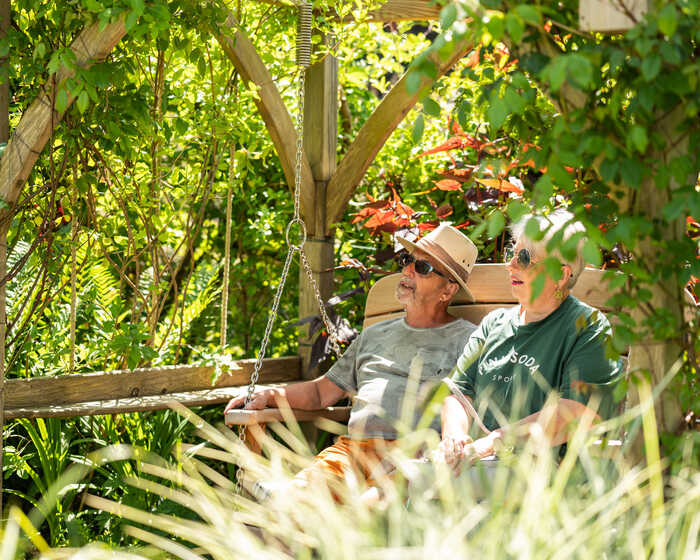
What is the best wood for an outdoor swing?
Which wood works best for a swing that lives outside year-round? Not all timber performs equally in British weather, and the choice you make here affects everything from durability to appearance to how much maintenance you'll be doing.
Prime European oak
Slow-grown, air-dried European oak is prized for its strength and the natural tannins that help it resist decay. Over time, it weathers to a distinguished silver-grey that many gardeners find more attractive than the original golden tone.
FSC-certified oak – meaning it comes from responsibly managed forests – is the timber of choice for RHS-endorsed swing seats. It's substantial, sustainable, and improves remarkably with age.
Accoya
Accoya is a softwood that's been through a process called acetylation, which dramatically improves its stability and rot resistance. It carries a 25-year or more guarantee and takes paint beautifully, making it ideal for coloured swings or gardens near the coast, where salt air accelerates weathering.
If you want a painted finish that won't peel or flake after a few seasons, the Affinity Accoya range is worth considering.
Western red cedar
Cedar is lighter than oak and has natural oils that repel moisture and insects. It has a warm, reddish tone and a pleasant aromatic quality. You'll often find it used for porch swings and standalone swing frames, particularly in North American designs.
Teak and tropical hardwoods
Teak has an excellent reputation for outdoor furniture, and deservedly so. However, availability and cost can be significant considerations compared to UK-grown or European options. For many British gardens, prime oak or Accoya offers comparable durability without the premium price tag.
|
Wood Type |
Durability |
Weather Resistance |
Appearance Over Time |
Best For |
|
Prime European Oak |
Excellent |
High |
Silvers gracefully |
Traditional garden swing seats |
|
Accoya |
Exceptional |
Very high |
Holds paint well |
Painted swings in exposed spots |
|
Western Red Cedar |
Very good |
High |
Warm, reddish patina |
Lighter-weight porch swings |
|
Teak |
Excellent |
Very high |
Honey to silver |
Classic or tropical styles |
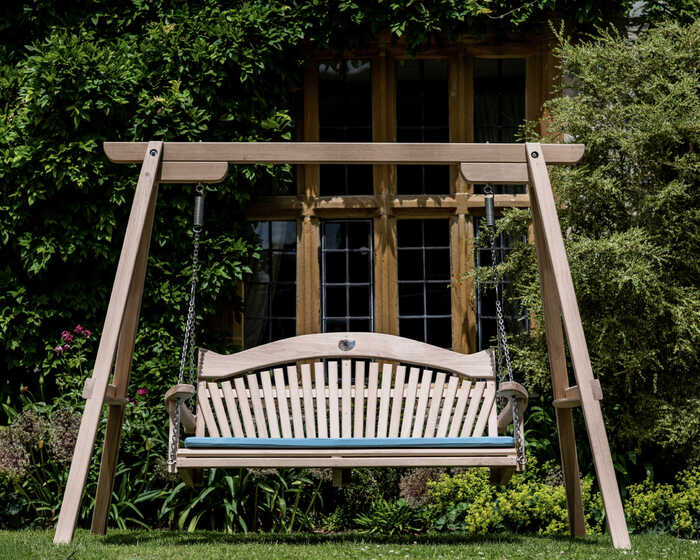
Types of wooden outdoor swings for gardens and porches
What type of wooden swing suits your outdoor space? The answer depends on how you want to use it, how many people will sit together, and where you plan to put it.
Garden swing seats
Garden swing seats are bench-style swings designed for two to four people, often becoming the focal point of a garden. Available up to generous four-seater designs, they typically offer a choice of back styles – Fan, Curve, Heart, Slat, or Swirl – and can hang from frames, pergolas, or sturdy tree branches.
You'll find garden swing seats in numerous RHS gardens – including Wisley, Rosemoor, Harlow Carr and Bridgewater. They're the kind of swing perfect for sitting with a cup of tea and watching the light change.
Wooden porch swings
Porch swings are a front-porch tradition, typically two-seater designs hung from porch ceilings or beams. The gentle, social swinging motion makes them perfect for conversation or watching the world go by. They're particularly popular in North America, though they work just as well on a covered veranda in Somerset.
Swinging day beds
Swinging day beds are larger, lounging-style swings that let you recline, read, or even nap. They often come with outdoor mattresses and cushions, creating something closer to an outdoor sofa than a traditional swing. If you've got the space, a day bed becomes the most-used corner of the garden surprisingly quickly.
Oak rope swings
Rope swings are simpler, more nostalgic – a wooden seat suspended by rope, suitable for adults and children alike. They're often hung from trees or frames, and some systems allow you to swap between different swing styles as the mood takes you.
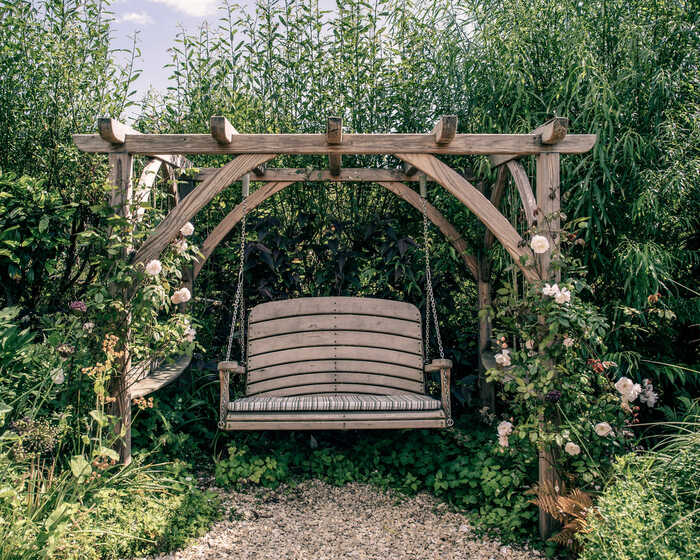
Frames, pergolas, and hanging options for wooden swings
How do you hang a wooden outdoor swing safely? The support structure matters just as much as the swing itself, and getting this wrong can be genuinely dangerous.
Freestanding wooden swing frames
A-frame and four-post standalone frames allow you to place a swing anywhere in the garden without needing a tree or existing structure. Cedar and oak are the most common materials, chosen for their durability and appearance. A good frame will be engineered to handle the dynamic loads of swinging – the repeated back-and-forth motion that puts stress on joints and fixings.
Oak pergolas built to carry a swing seat
Here's something worth knowing: most decorative pergolas aren't engineered for the dynamic loads of a swinging seat. The repeated motion creates stresses that a standard pergola simply isn't designed to handle.
Bespoke pergolas built to support swing seats use substantial posts, proper bracing, and marine-grade fixings. They're typically pre-built in workshops to ensure precise assembly on site. If you're planning to hang a swing from a pergola, it's worth checking whether the structure was designed with that in mind.
Hanging safely from a tree or beam
If you're hanging from a tree, the branch typically needs to be at least 20cm in diameter, healthy, and from a suitable species. Oak and beech work well, while willow and poplar don't have the structural strength. Proper hardware like eye bolts rated for the load is essential.
Tip: If you're unsure about your tree or beam, it's worth getting professional advice before installation. The consequences of getting this wrong aren't worth the risk.
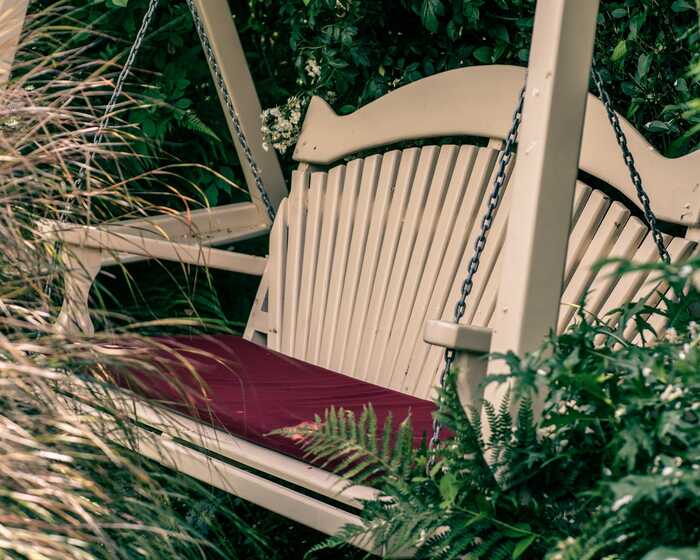
Craftsmanship and hardware that build in longevity
What separates a premium wooden swing from mass-produced furniture? Often, it's the details you can't immediately see.
Oversized internal frames: Hidden bracing adds rigidity without visible bulk
Marine-grade stainless steel fixings: Resist rust even in coastal or damp conditions
Traditional joinery: Mortise-and-tenon or dowelled joints outlast simple screw assembly
Pre-drilled rope threading: Rope passes through the seat rather than wrapping around it, preventing wear at stress points
Ergonomic shaping: Seats curved for comfort reduce pressure points during longer sits
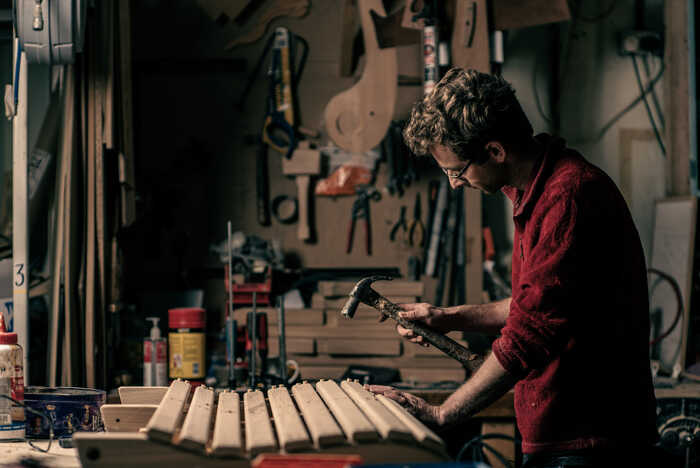
Handcrafted, made-to-order swings from specialist makers typically include all of this. Flat-pack or imported swings often don't – and the difference becomes apparent after a few British winters.
Caring for a wooden outdoor swing year-round
Quality wooden swings don't demand constant attention, but a simple seasonal routine keeps them looking and performing their best for decades.
Choose the right spot in the garden
Placement affects wear more than you might expect. Dappled shade reduces UV bleaching, while good airflow prevents damp from lingering on the timber. Avoid positioning frames on waterlogged ground, as this can accelerate rot at the bases of posts.
Check marine-grade fixings each season
Inspect bolts, chains, and hanging hardware for tightness and wear at least once a year. Spring is ideal, before the season of heavy use begins. Even marine-grade stainless steel benefits from a quick check.
Clean and refresh the timber
Gentle cleaning with soapy water removes dirt and algae. Oak can be left to silver naturally or treated with oil to maintain its golden colour – it's really a matter of preference. Painted Accoya may need occasional touch-ups, though high-quality finishes last for years between coats.
Refurbish rather than replace
High-quality swings can be refurbished after many years – sanding, re-oiling, or repainting – rather than discarded. Some makers offer refurbishment services that extend a swing's lifespan by decades. It's one of the advantages of buying something well-made in the first place.
Choosing a wooden outdoor swing you will treasure for decades
What matters most when it comes to choosing the right outdoor swing? The timber, certainly. The craftsmanship. The style that suits your space. But also this: choosing something you'll actually use, positioned where you'll naturally gravitate to it.
We'd love to hear your thoughts. If you'd like to talk through your options, chat to us live by using the icon in the bottom-right corner, and we'll help you find the perfect wooden outdoor swing for your space.
FAQs about wooden outdoor swings
Can a wooden outdoor swing stay outside all year in the UK?
Yes, swings made from durable timbers like oak, Accoya, or cedar with marine-grade fixings are designed to live outdoors year-round. You don't need to bring them inside or cover them, though a breathable cover can reduce cleaning between seasons.
How much weight can a wooden garden swing hold?
Weight capacity depends on the frame and hanging system. Well-engineered swings typically support several adults comfortably, but always check the maker's specifications for your chosen model before purchase.
Do I need to treat or oil my wooden outdoor swing?
Oak can be left untreated to weather to silver, or oiled annually to preserve its golden tone. Painted Accoya holds its finish for years with only occasional touch-ups. It's largely a matter of which look you prefer.
How long does it take to receive a bespoke wooden swing?
Made-to-order swings from specialist makers typically have lead times of four to six weeks, so plan ahead if you want your swing ready for a particular season or occasion.
What does FSC-certified oak mean for outdoor furniture?
FSC certification confirms the oak comes from responsibly managed forests, ensuring your swing is an environmentally sound choice as well as a durable one. It's worth looking for if sustainability matters to you.
Posted by Sitting Spiritually on July 28th 2026
 Updating page...